
Description
Guatemala
A large percentage of Guatemala’s population, and therefore also the coffee sector, identify with one of more than 20 officially recognized indigenous groups. Most farmers are smallholders who are either working independently of one another, loosely associated by proximity and cultural ties, or formally affiliated in cooperative associations.
In 1960, coffee growers developed their own union, which has since become the national coffee institute Anacafé (Asosiación Nacional del Café), which is a research center, marketing agent, and financial organization that provides loans and offers support to growers throughout the various regions.
Starting in 2012 and lasting for several years, an outbreak of coffee-leaf rust proved a tremendous obstacle to coffee production in the country, reducing yields by as much as 25%, and causing the government to declare a state of emergency. Farmers attempted a combination of chemical and organic treatments, intensely targeted pruning, reduction of shade plants, and replacing susceptible varieties like Bourbon, Caturra, and Catuai with more leaf-rust-resistant ones. Anacafé has been working closely with World Coffee Research on variety trials and research that will hopefully result in future protection and prevention of similar outbreaks, as well as provide more productive harvests for the smallholder farmers.
Washed
The Washed process varies greatly across the growing regions of Guatemala due in large part to the different terroir and terrain that exists from place to place there, but for the most part the primary difference in style is in the length of time that the coffee is allowe to ferment. Generally speaking, coffee is picked ripe and depulped the same or the following day, then allowed to ferment for anywhere between 12–48 hours, depending on the climate. The coffee is then washed clean of its mucilage and spread on patios or raised beds to dry.
Bourbon, Catimor, Caturra, Maragogype, Pache
Although this offering is not traceable to a single variety, it is likely comprised of Bourbon, Catimor, Caturra, Maragogype, and Pache — the most commonly cultivated varieties in this region.
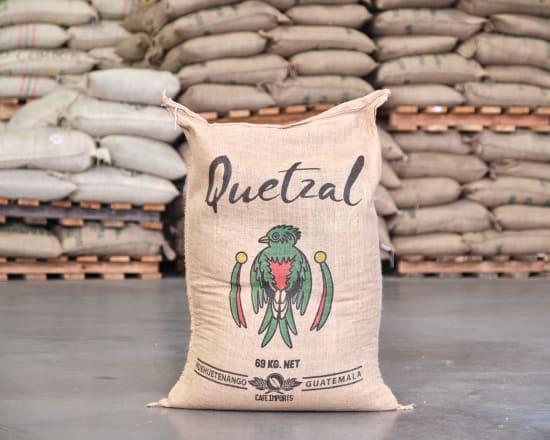
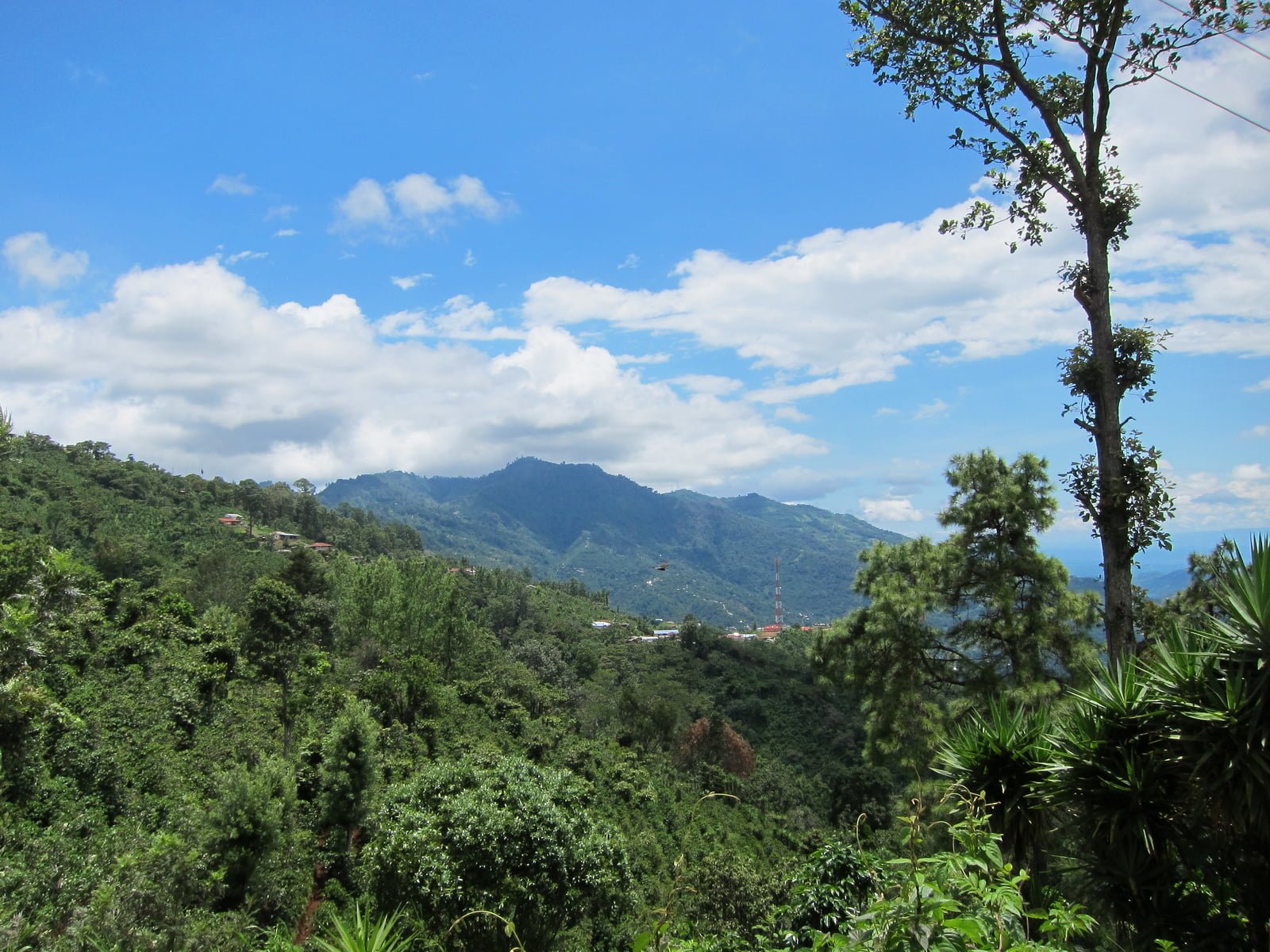
Huehuetenango
Huehuetenango is located in Western Guatemala bordering Mexico. It is extremely diverse and known for producing some of the best coffees in Latin America due to its climate, altitude, water sources, and traditional varieties. A range of offerings come out of Huehuetenango, including chocolatey volume offerings and fruit-forward microlots.


Reviews
There are no reviews yet.